 1 866 824 8314
EvacuTrac - Evacuation Chair
Does your emergency evacuation plan include an evacuation chair for someone with a mobility-related disability? In the event of a fire or earthquake, elevators should not be used for the emergency evacuation of a building. In this situation, people with limited mobility may be trapped or have to wait for a prolonged period of time in an area of refuge.
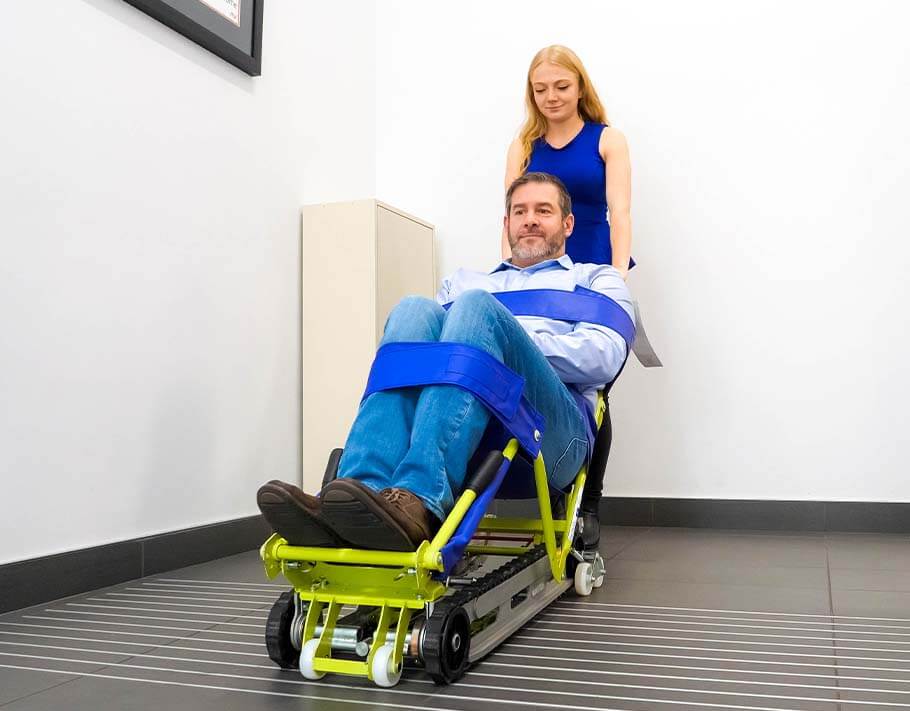
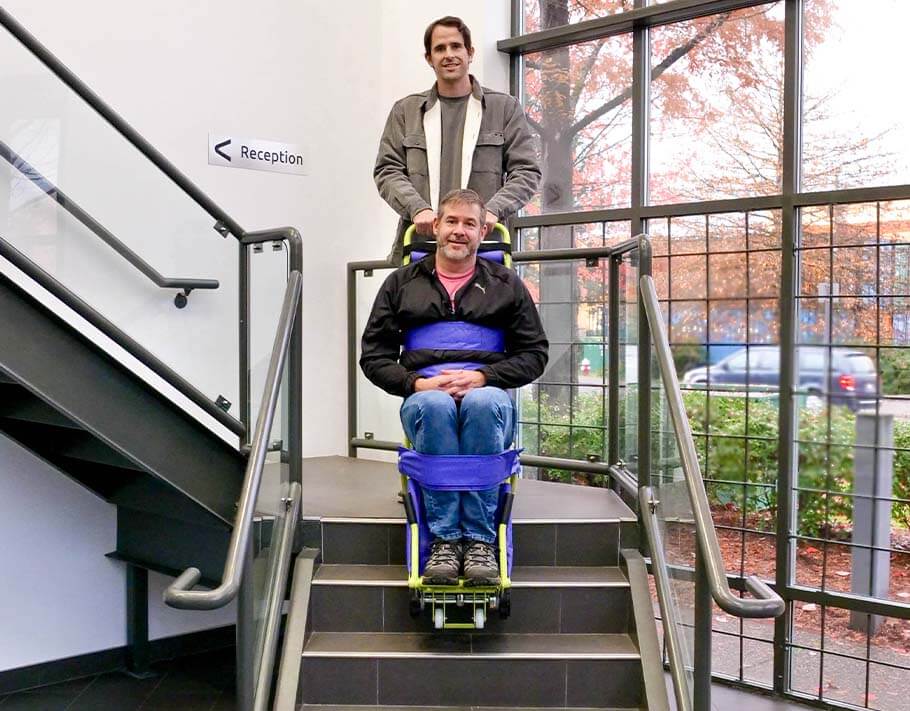
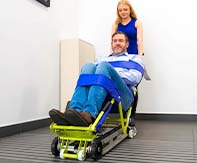
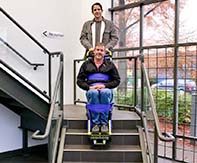
Designed so that a small attendant can easily move a much larger passenger down the stairs, the Evacu-Trac is easily set up and ready for a passenger to transfer from their wheelchair to the comfortable sling seat. This evacuation chair has durable rubber tracks that firmly grip the stairs and the safety brake can stop the unit on the stairs if necessary. The Evacu-Trac is completely stable and self-supporting on flat surfaces and during descent.
Highlights:
- The safest evacuation chair!
- One person operation
- Lower transfer height
- Easy to operate
- Speed Governor
- Fast deployment
- Low center of gravity
More information can be found in the Downloads
DownloadsEvacutrac Photo Gallery
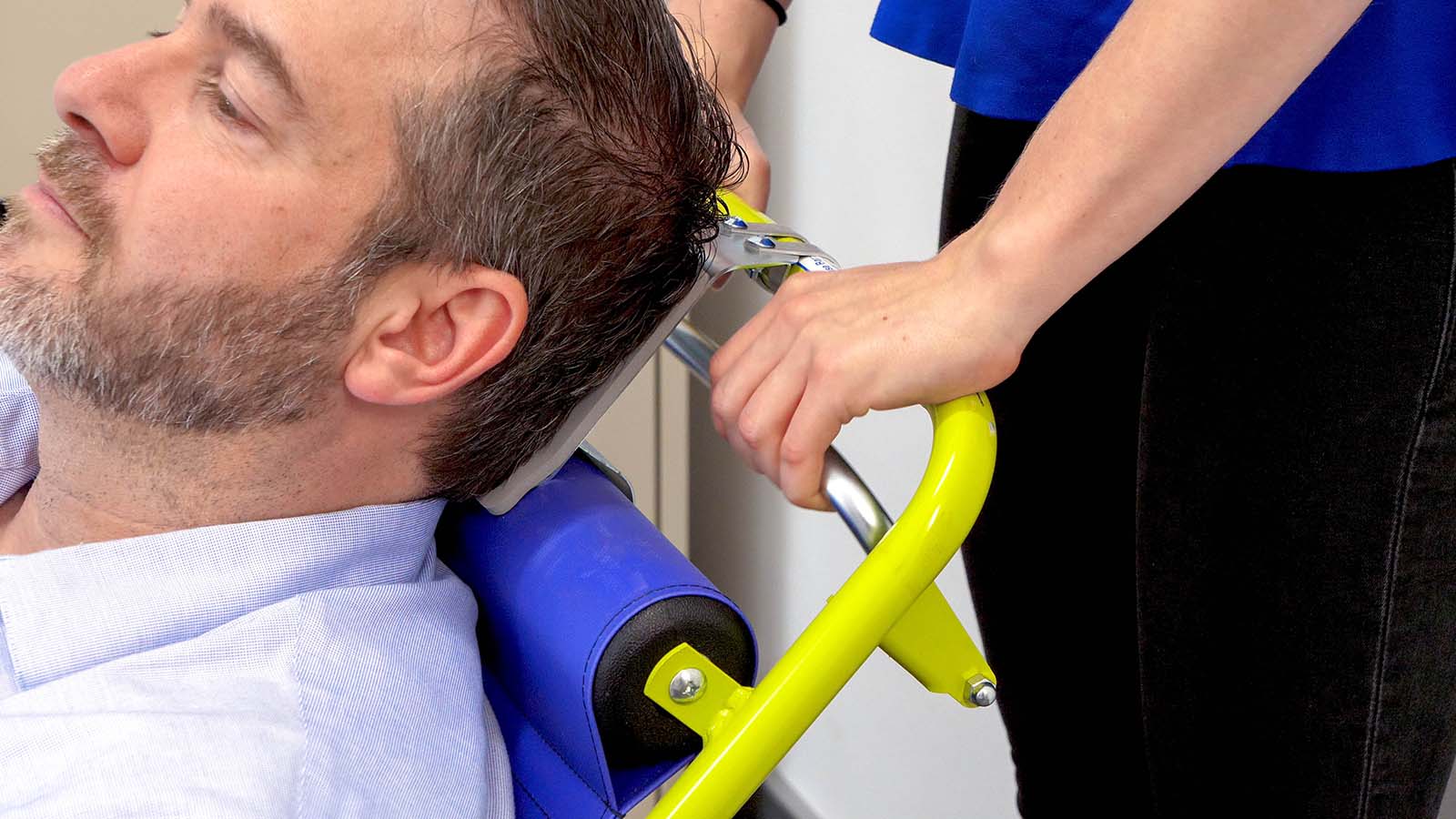

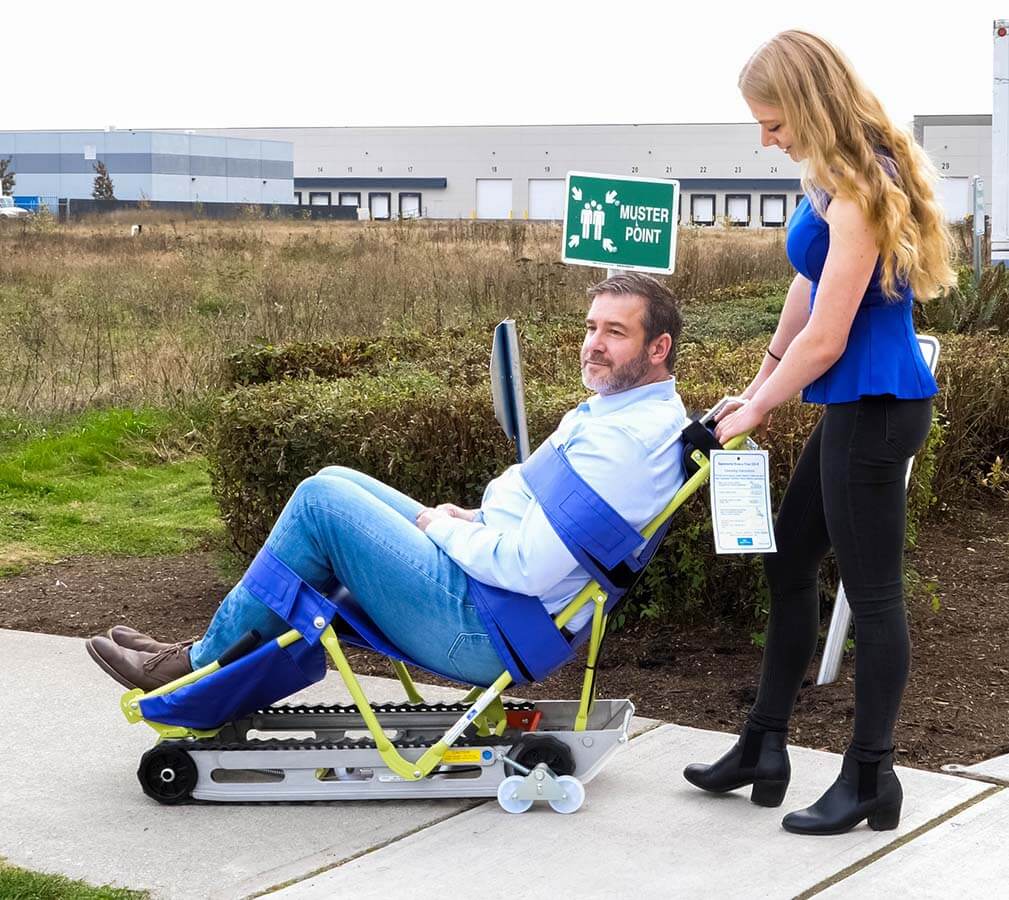
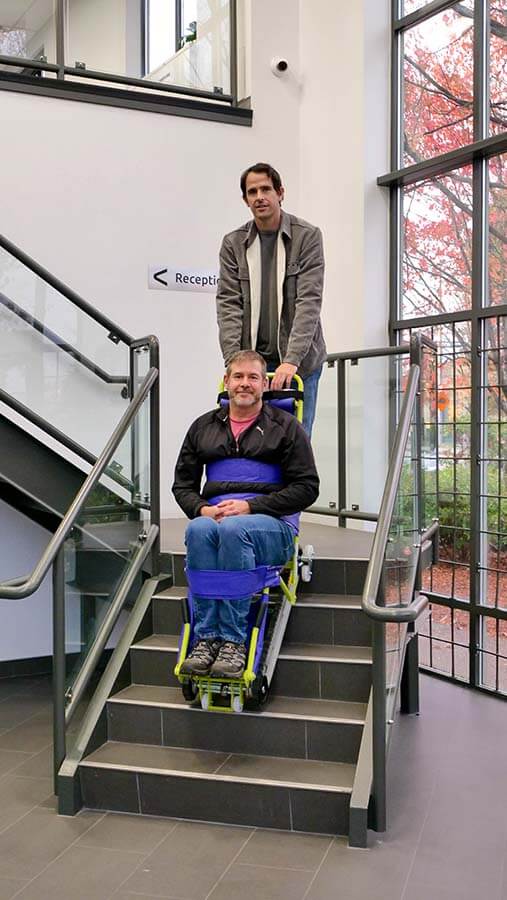
Operating the Evacu-Trac evacuation chair
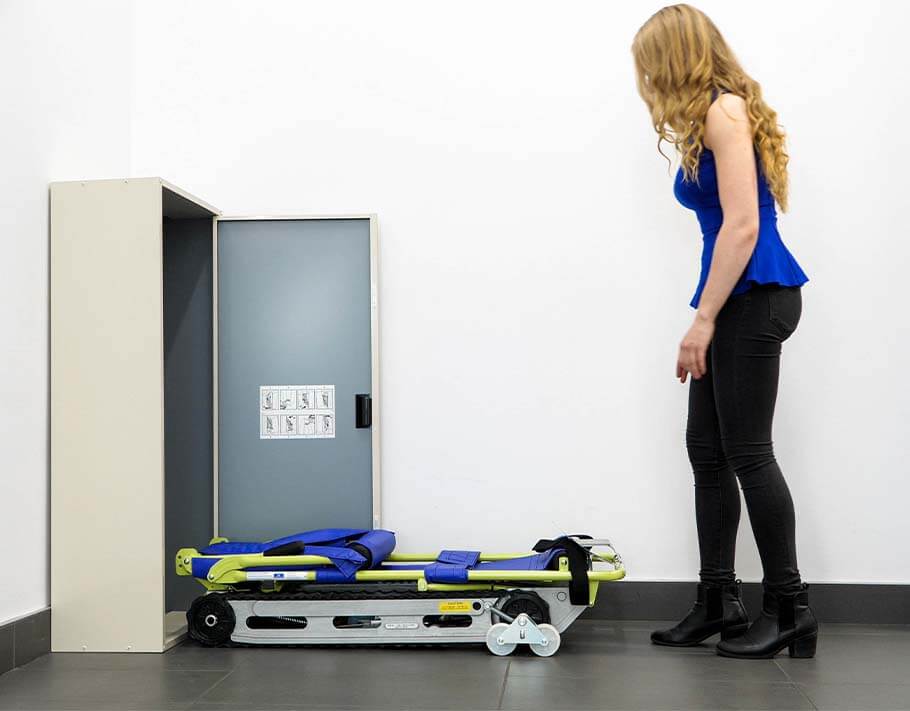
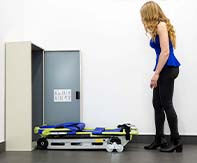
The Evacu-Trac evacuation chair is normally kept in a storage cabinet located near the upper stair landing, ready for use in an emergency situation.
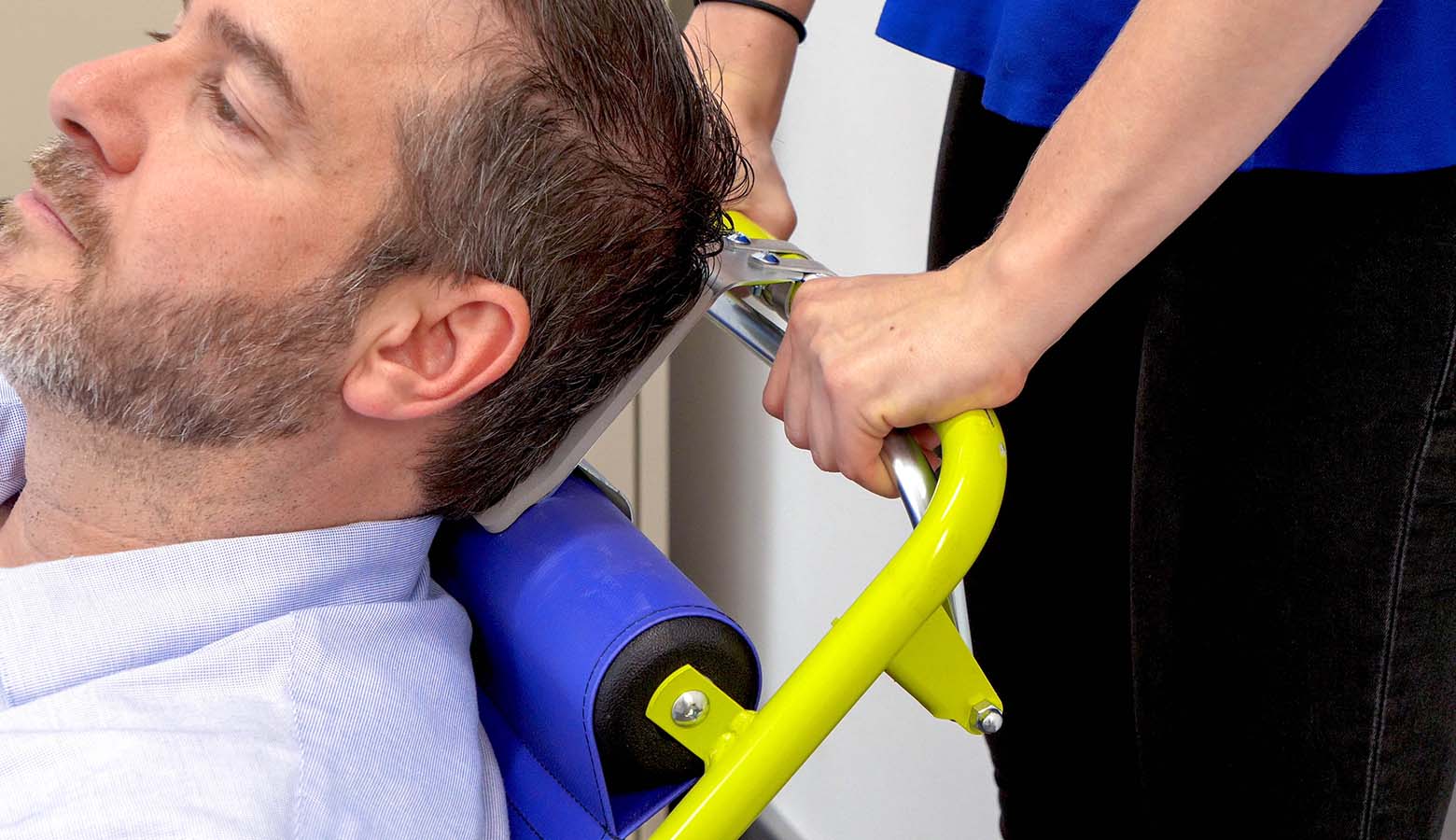
Remove the evacuation chair from the storage cabinet and place the unit on a flat surface. Grasp the handle and pull it up in a quick, smooth motion. This will lock the Evacu-Trac in the open position.
Transfer passenger from their wheelchair to the Evacu-Trac. Three Velcro straps are provided for securing the passenger. These straps help immobilize an injured person or help transport a person with no upper body control. The lower torso straps allows a younger passenger to be well secured while being transported in the emergency stair chair.
The Evacu-Trac brake is normally on. To descend the stairs, release the brake by slowly squeezing the brake lever. Descent speed can be slowed by reducing pressure on this lever. A governor limits the maximum descent speed to about 3' per second, allowing even a small attendant to safely transport heavier riders.
It is recommended to use the inside of the stairway to allow room for other traffic and to make it easier to turn corners at stairway landings.
On stairs, the tracks securely grip the stair noses and control the descent speed regardless of the stair covering. On flat surfaces, the evacuation chair can be pushed on its wheels as easily as a stroller. This feature allows the user to be transported to an area clear of the emergency rather than to an area of refuge.
Once clear of the emergency area, park the evacuation chair on a flat surface and engage the brake by releasing the bar.
Features of the Evacu-Trac Evacuation Chair
The Evacu-Trac evacuation chair should be kept in any multi-storey building where disabled people live, work, or visit. It provides a fast safe and reliable means of evacuation. This easy to use evacuation device is equipped with many safety features and most importantly, provides people with limited mobility an equal opportunity for escape in an emergency.
Features
- Quick and easy set up for immediate use.
- Carries up to 300 lbs.
- Passenger's weight moves unit downstairs, while the speed governor controls descent speed.
- Failsafe brake brings unit to a complete stop automatically.
- Sling seat is made of fire-retardant fabric and is easy to clean.
- Three adjustable safety straps.
- Stable and self-supporting.
- Unique seat design allows easy transfer from wheelchair.
- Durable tracks grip stairs securely, regardless of the stair construction material.
Benefits
- Provides quick and safe emergency evacuation.
- Eliminates prolonged waiting in an area of refuge.
- No hand carrying of people with limited mobility.
- Small attendants can easily move heavier passengers.
- Easily stores in a secure area when not in use.
- Peace of mind for building occupants and owners.
- Requires minimal maintenance.
- Available immediately.
Stairway Clearance Dimensions
Test Stairway Clearance with Demo Unit
If you stairway dimensions are close to these minimum requirements we suggest you test your stairway using a demo unit supplied by Garaventa. Contact us to discuss loan of a demo to test your stairway clearance.


Specifications
| Load Capacity: | 182kgs/400lbs | |
| Speed: | 1.1(3.6ft)/sec* | |
*varies with weight | ||
| Maximum Stair Angle: | 40° | |
| Weight: | 20.7 kg/46 lbs | |
| Speed Restriction: | by hydraulic governo | |
| Manual Stop brake on stairs. | ||
Dimensions | ||
| Operating | ||
| Length: | 1310mm/51.6in | |
| Width: | 426mm/16.8in | |
| Height: | 810mm/31.9in | |
Folded | ||
| Length: | 1100mm/43.3in | |
| Width: | 426mm/16.8in | |
| Height: | 270mm/10.6in | |
Storage Cabinet (optional) | ||
| Height: | 1151mm/45.3in | |
| Width: | 508mm/20.0in | |
| Depth: | 279mm/11.0in | |
Clearances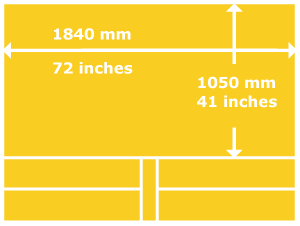 | The diagram above shows typical clearances required on turn-back stairways. Dimensions vary with stairway width and operator experience. Consult Garaventa Lift or your local Garaventa Lift Representative for clearance verification. |